Featured Post

Mental Health for First Responders, Front line and Essential Workers

Hello! We hope that everyone has been safe and healthy during these difficult times. This is certainly an unexpected event that is trying bo...

Tuesday, November 19, 2019

Mind Body's Guide to Taking Care of your Mental Health Over the Holidays


Mind Body’s Guide to Taking Care of your Mental Health Over the Holidays

The Holiday season is upon us, and along with the Hallmark joy, food, cheer, and presents, comes the not-so-jolly exacerbations of anxiety, stress, and depression. These feelings are not uncommon, but not commonly talked about. They are brought up by stresses over money and overindulging, perfectionism and high expectations, triggers of loss and trauma, family issues, and overcommitting oneself during this time of year. 
 Related image
BUT!

From yours truly here at Mind Body Co-op, is a list of tips and tricks to help you take care of your mental health to avoid and lessen the stressors brought on over the holiday season. Taken straight from our staff, try these out this season....

  1.  Boundaries. The biggest and most popular suggestion to come from our staff is boundaries. Our Medical Director and Psychiatric Nurse Practitioner Dr. Jenni Osborne wrote, specifically, “BOUNDARIES BOUNDARIES BOUNDARIES!”. Jillian Lynum, one of our staff psychologists, says, “learning to say no to demands and not overexerting yourself” is a number one struggle during the holidays and practicing setting boundaries should be a priority. 
  2. Self-Care. Self-care was the second most popular answer from our team. While this should be practiced year-round, paying special attention to your needs and addressing them accordingly is very important during this busy time of year. Dr. Beth Elia, our Clinical Psychologist, gives examples of “starting yoga or Pilates, which can be done for free with apps or YouTube at home-even for 20 minutes. Our Director of Somatic Mindfulness Therapy, Jamie Klausing suggests scented/Aromatherapy showers and detox baths, or to self-care however you best do it. We often think of what we can do for others during this time of year, which, while nice and gratuitous, can be stressful and draining. Dr. Kellie Rice, our Founder and Clinical Director prompts us to remember, “You are not responsible for other people’s feelings!”. Don’t forget to do things for YOU.
  3. Plan. Irina, one of our psychotherapists and a Kundalini Yoga Teacher, suggests we “Rehearse, plan, and prepare if you think could be something you might struggle with”, with Dr. Kellie Rice reminds us that “Past behaviors are the best predicters or future behaviors”. Recognize your stressors, limits, and boundaries, and make a plan on how you are going to handle them, have planned activities set, and “cope ahead”, planning phrases and behaviors for triggering comment and events. Other suggestions include having a trusted phone list of people you can call for support, and even to have scheduled check-ins with this special list of people.
  4. Be gentle with yourself. Christa Eastburn, the Director of Client Relations and Co-Facilitator of our Adventure Therapy Program, wants you to remember to keep your head up and be gentle with yourself. Apply this one all over this holiday season! Such as, all food is good food in moderation, don’t focus on meeting all the expectations and obligations we and our families put upon us,  and have confidence that you can handle this time of year. Positive self-talk and journaling can help practice this important one.  Aimee Doko, one of our somatic psychotherapists, also suggests that "rather than repressing your thoughts or memories, allow yourself to express your feelings". Be aware of all the positive and negative thoughts you are experiencing and give yourself permission to feel them, and take care of them accordingly. 


Everyone feels some kind of stress during the holidays. Exacerbation of anxiety and depression are common as well. Hopefully, with these tips, we can all find the joy and love this season is supposed to be about. This holiday season, take care of yourself and your mental health.

Happy Holidays,
The Mind Body Co-op TeamRelated image

Thursday, November 14, 2019

Assessment and ADHD


The Role of WISC-V/WAIS-IV in the Assessment of Children with ADHD
Courtney Thompson
Illinois School of Professional Psychology


Introduction
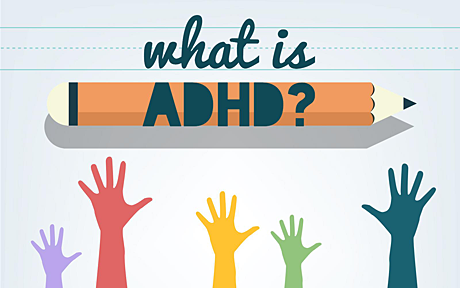
Attention-deficit/hyperactivity disorder (ADHD) is a neurodevelopmental disorder that is prevalent in both children and adults. Current diagnostic criteria describe the disorder as a “persistent pattern of inattention and/or hyperactivity-impulsivity” that impedes daily functioning and may interfere with normal development (American Psychiatric Association, 2013, p. 59).
The WISC-V and WAIS-IV have been shown to be important parts of identifying the strengths and weaknesses of children, adolescents, and adults with ADHD.

Related image
ADHD
 According to the Centers for Disease Control and Prevention between 2013-2015 at least 10.4% of population of children were being diagnosed with ADHD. Many people believe that ADHD is mostly a male problem. Boys are twice as likely as girls to be diagnosed, but the numbers may begin to shift as there have been more studies on how ADHD shows up in females (Brody, 2015).
 A child can be diagnosed with one of these three subtypes of ADHD:(1) ADHD Predominantly Inattentive presentation (ADHD-I), (2) ADHD Predominantly Hyperactive-Impulsive presentation (ADHD-H), and (3) ADHD Combined presentation (ADHD-C). The different subtypes of ADHD are characterized by inattentive symptoms, hyperactive/impulsive symptoms or a combination of both. For a child to qualify for a diagnosis of ADHD they must exhibit six or more symptoms. The inattentive symptoms that a child would display to receive the diagnosis would be: an inability to pay attention to details; a tendency to make careless errors in school work or other activities; difficulty with sustained attention in tasks; apparent listening problems; difficulty following instructions; and problems with organization (American Psychiatric Association & American Psychiatric Association, 2013).Hyperactive/impulsive symptoms include: fidgeting or squirming; difficulty remaining seated; excessive running or climbing; difficulty playing quietly; always seeming to be “on the go”; excessive talking; blurting out answers before hearing the full question; difficulty waiting for a turn or inline; and problems with interrupting or intruding (American Psychiatric Association et al., 2013). Finally, the Combined type is characterized by a combination of the other two types. The combined type is the most commonly diagnosed type of ADHD and, overall, this type is characterized predominantly by a difficulty controlling one’s behavior (American Psychiatric Association et al., 2013).
 The onset of behaviors typically begins in preschool and the initial behavior to manifest is hyperactivity, with the inattention emerging in elementary school (American Psychiatric Association et al., 2013). According to the DSM-5, a child must display these symptoms before the age of 7, and the symptoms must be more severe than other children their age. The child must display the behaviors for at least 6 months, and they must occur in and negatively affect at least two areas of a child’s life (i.e., home and school). Lastly, these behaviors must not be linked to trauma or stress at home or in school (American Psychiatric Association, 2013)
 Executive functioning allows a child to organize and order behavior (Nugent, 2013). According to Berkley, ADHD includes deficits in behavioral inhibitions. There are 4 neuropsychological functions that appear to depend on it for their effective execution, working memory, self-regulation of affect-motivation-arousal, internalization of speech, and reconstitution (behavioral analysis and synthesis) (Barkley, 1997, p. 65). Berkley’s model focuses on the importance the child’s ability to self-regulate their behavior which is tied to the difficulties the child may experience with executive functioning. Although children with ADHD possibly struggle with self-regulating their behavior, persistence with modeling and teaching self-regulating behaviors will allow the child to achieve their full potential.
 Berkley’s model suggests that children  with ADHD struggle with working memory, retention and oral repetition of digit spans (especially in reverse order); mental arithmetic, such as serial addition; locating stimuli within spatial arrays of information that must be held in memory; and holding sequences of information in memory to properly execute a task.(Barkley, 1997). Children with ADHD tend to perform poorly on the tasks digit span, athematic and coding. There is a concern the children that are performing poorly on working memory tasks may have deficient athematic knowledge or slow motor speed but the research concludes that it’s from the deficiency in working memory for children with ADHD.

WISC-V/WAIS-IV
 Intelligence tests are an important diagnostic tool for ADHD for both children and adults. In 2014, the most recent edition of Wechsler’s intelligence scales was introduced, the WISC-V (Wechsler, 2014a). The Wechsler’s scales continue to be updated based on emerging research. The Wechsler scale continues to maintain itself as a culturally valid measure through ongoing research.  The Wechsler scale has always included some measure of fluid reasoning, working memory, and processing speed. The WISC-V was structured in a way to ensure the measures are more significant.
 The WISC-V is comprised of a five-factor structure assessing verbal comprehension (VCI), visual-spatial (VSI), fluid reasoning (FRI), working memory (WMI), and processing speed (PSI) (Wechsler, 2014a). The PRI from WISC-IV was split with Block Design (BD) becoming part of the VSI on the WISC-V. Visual Puzzles (VP), which was previously seen in the Wechsler Adult Intelligence Scale, Fourth Edition (WAIS-IV), was also included on the VSI. Matrix Reasoning (MR) became part of the FRI, along with Figure Weights (FW) from the WAIS-IV. Supplemental measures for the FRI include Picture Completion (PC) and Arithmetic (AR). The VCI is comprised of Vocabulary (VC) and Similarities (SI), with Information (IN) and Comprehension (CO) included as supplemental measures. The WMI kept Digit Span (DS) and added a new visual working memory task called Picture Span (PS). Letter-Number Sequencing (LN) became a supplementary subtest. The PSI remains the same (Wechsler, 2014a).
Image result for adhd 


WISC-V/WAIS-IV and ADHD
 As a group, children with ADHD tend to have a slightly lower IQ than comparison groups of children (Nigg, 2009). Children with ADHD sometimes underachieve academically as a result of of their poor attention and inability to focus on a task. Children with inattention and hyperactive traits of ADHD consistently perform poorly on measures of attention, executive function, and processing speed (Clark, Prior, & Kinsella, 2000)
 Having children suspected of ADHD complete cognitive measures is important, and one role of the WISC-V in the assessment process of ADHD lies in its ability to aid in ruling out other comorbid conditions such as learning disabilities, reading disorder, and dyslexia. In severely affected children, marked problems with auditory memory accompany the learning disability (Nigg, 2009, p. 2). Children with a weakness in verbal processing may benefit from other interventions such as pictures, diagrams, lists, maps.
For children who are diagnosed with ADHD from a young age, addressing the challenges the child will experience has the potential to give the child the greatest chance of success. The diagnosis has the potential to impact many aspects of their lives both academically and socially. Throughout a child’s educational career if they remain undiagnosed this will have adverse effects on their academic, social, and developmental needs. If a child is correctly diagnosed early in life this will give them the greatest opportunity for successfully navigating academic, social, emotional, and behavioral needs.

Conclusion
 The WISC-V and WAIS-IV are integral parts of identifying the strengths and weaknesses of children, adolescents, and adults with ADHD. Having an understanding of a client’s cognitive strengths and weaknesses can inform what their treatment process will be. This will provide them with the greatest success academically, socially, emotionally and, developmentally. The WISC -V can provide tailor made recommendations for the teachers and parents for the management of a child’s ADHD. If the right interventions are set into motion early the child will have a greater chance at success.   Many children with ADHD struggle with executive function and their struggle to focus so as psychologists it’s about giving the parents, teachers and, children the tools for success.


References


Thursday, October 24, 2019

Halloween Awareness


It’s almost that time of year again…Halloween!  A fun time for children and adults to dress up as their favorite characters, have Halloween parties, and, most importantly, to indulge in sweets. While Halloween has evolved to be a fun time of year, many of us celebrate the day without knowing the cultural, religious, or spiritual, and psychological meanings behind the holiday. In this post we quickly go over a few of these meanings and urge everyone to do more of their own research in order to learn more about and respect these meanings different to what you may know.
Image result for dia de los muertos 
Cultural, Religious, or Spiritual Awareness
A History of All Saints' DayWhile in the United States we call it Halloween, the holiday is known as “Day of the Dead” and “All Saints Day”, “All Souls Day” or “All Hallows Eve” by European or Latin cultures. These days of observance were originally religious or spiritual events intended to be a joyful occasion to celebrate the souls of the deceased while feasting and praying. The United States’ Halloween is rarely portrayed as being a day of celebration to honor souls. Instead, it has become a day of entertainment.

Psychological Awareness
Many parents may find themselves trying to monitor or avoid buying their kids' scary costumes or watching scary movies because of concerns or observations about increased fear, anxiety, and/or panic. However, this does not just hold true for children. Scary movies, storylines, and costumes often represent increased stigma for mental health, including the use of strait jackets or restraints, haunted houses being staged in hospitals and prisons, and individuals being portrayed as dangerous or “insane”. In addition to furthering the misconceptions that mental health and people with mental health are scary/bad, these images can be traumatic for people with or without mental illness because of these misconceptions. Many symptoms of mental illness can become exacerbated for individuals to be hospitalized or restrained or be placed in psychiatric facilities for stabilization. These possibilities alone can be terrifying for people with (or without) mental illness to think about, witness, and experience themselves, and therefore they may not be able to enjoy Halloween the same way as others do. Misconceptions of mental health symptoms and illnesses are very real for people and the loved ones that care for them and may be difficult to witness as a source of entertainment during the Halloween season.
Image result for halloween and mental health 
Halloween is a fun time of year! We hope everyone safely enjoys all is has to offer (especially lots of candy!). In addition, we hope you challenge yourself to raise awareness to others and provide education to reduce the painful stigma associated with mental illness, as well as learn about and respect the other cultural, religious, and spiritual practices of this day.